
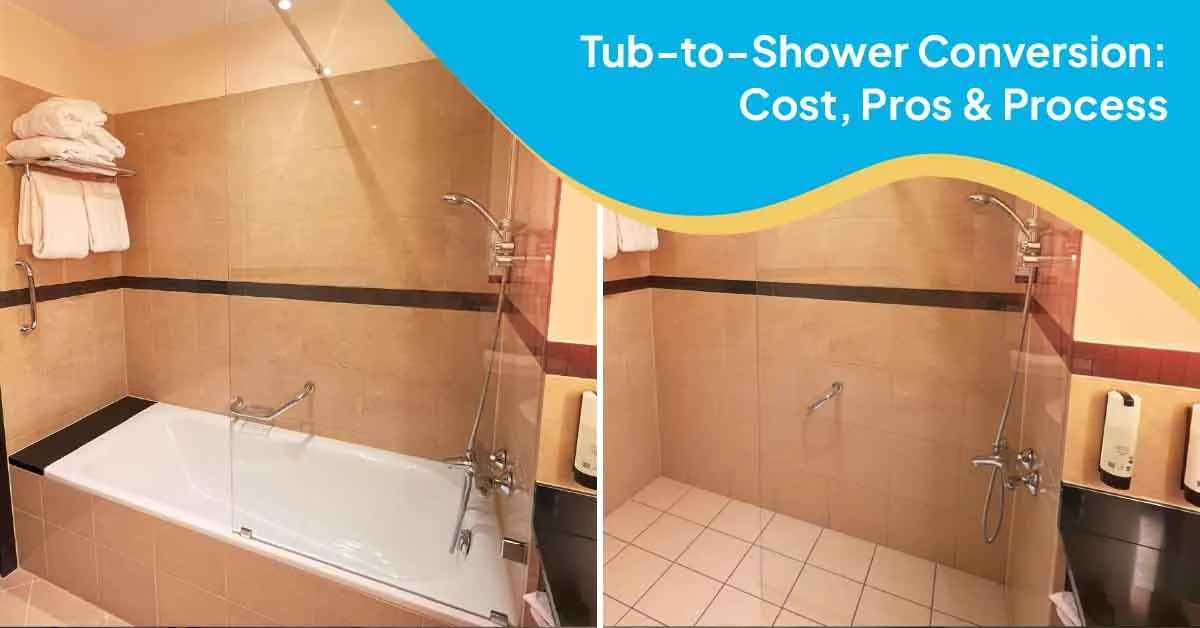
A tub-to-shower conversion is one of the most requested bathroom upgrades we handle at 7 Cities Kitchen & Bath. Homeowners across Hampton Roads, from Virginia Beach to Norfolk to Chesapeake, call us because the tub sits unused while the shower gets all the traffic. If that sounds like your home, this guide walks you through everything: what it costs, how the process works, and whether it makes sense for your situation.
What Is a Tub-to-Shower Conversion?
A tub-to-shower conversion removes your existing bathtub and replaces it with a walk-in shower in the same footprint. The drain stays in a similar position. The walls get new tile or acrylic panels. A shower base or custom shower pan replaces the tub floor.
In short, it turns a rarely-used tub into a functional, easy-access shower, often without moving plumbing.
Most homeowners choose this upgrade for one of three reasons. Their tub has gone years without a single soak. They want easier daily access. Or they are planning for aging in place. All three are solid reasons. A conversion addresses each one without requiring a full bathroom gut job.
How Much Does a Tub-to-Shower Conversion Cost?
The walk-in shower cost for a standard conversion in the Hampton Roads area runs between $3,000 and $10,000. The final number depends on the finish level, materials, and whether any plumbing needs to be moved.
Here is a simple breakdown:
| Conversion Type | Estimated Cost Range |
| Basic acrylic kit (DIY-style install) | $1,500 – $3,500 |
| Mid-range professional conversion | $3,500 – $6,500 |
| Custom tile walk-in shower | $6,000 – $12,000+ |
| Curbless / ADA-accessible conversion | $5,000 – $10,000 |
The tub-to-shower conversion cost in Hampton Roads sits near the national average, though labor costs in coastal Virginia can run slightly higher due to older home infrastructure and occasional moisture-related subfloor repairs.
A few cost factors matter most. Plumbing relocation adds $500 to $1,500 or more. Tile work costs more than acrylic panel systems. Shower glass enclosures add $800 to $2,500. If your subfloor shows moisture damage after tub removal, that repair adds time and cost.
It also helps to think about fixtures early. A basic showerhead and valve package costs $150 to $400. Upgrading to a Kohler or similar brand with a rainfall head, hand spray, and thermostatic valve can add $800 to $2,000. These upgrades matter more than people expect. You use the shower every day. Spending a little more on the hardware usually pays off in long-term satisfaction.
Our bathroom remodeling services include a full estimate before any work starts.
The Conversion Process, Step by Step
Most professional conversions take two to five days. One-day conversions using prefab acrylic kits are possible, but custom tile work takes longer.
Step 1: Remove the Tub
We disconnect the plumbing, remove the tub, and inspect the subfloor and walls behind it. Water damage here is common in older Hampton Roads homes. We address it before anything else goes in.
Step 2: Prepare the Space
We waterproof the walls and floor using a moisture barrier. This step matters especially in coastal Virginia, where humidity is high year-round. Skipping it leads to mold problems later.
Step 3: Install the Shower Pan or Base
We set a prefab shower base or pour a custom mortar bed for a tileable floor. Curbless designs require sloping the floor toward the drain more precisely.
Step 4: Install Walls
We apply either acrylic wall panels or cement backer board for tile. Tile goes up next if that is the chosen finish.
Step 5: Install Fixtures and Glass
We connect the showerhead, valve, and controls. Then we install the glass door or frameless enclosure. Grab bars go in if requested.
Step 6: Grout, Seal, and Inspect
We grout tile joints, seal all edges, and run a full water test. We also clean up and do a final walk-through with you before calling the job done.
No permit is typically required for a like-for-like conversion where plumbing stays in place. However, if we move the drain or add a new supply line, a permit may apply. We handle that process for you.
One thing homeowners often ask about is what happens to the wall around the tub surround. In most cases, the drywall behind a tub is standard greenboard or cement board. We inspect it during demolition.
If it is in good shape, we reuse the framing and just apply new backer material. If moisture has gotten behind the walls over the years of use, we replace that section before waterproofing. Either way, you start fresh with a dry, properly sealed wall system.
Acrylic vs. Tile: Which Should You Choose?
Both work well. The right choice depends on your budget, timeline, and style preference.
| Acrylic Panels | Tile | |
| Cost | Lower | Higher |
| Install time | 1 to 2 days | 3 to 5 days |
| Maintenance | Easy to clean, no grout | Grout needs sealing |
| Look | Clean and uniform | Custom, high-end |
| Durability | Good, but can scratch | Very durable |
| Best for | Budget-minded buyers, quick updates | Long-term investment, resale |
Acrylic panels suit homeowners who want a fast, clean result without a big spend. Tile suits those who want the look to last 20 years or more and plan to stay in the home. For more ideas on layout and style, check out our walk-in shower design ideas.
One more option worth mentioning is a solid surface panel system. These are thicker than standard acrylic and mimic the look of stone without the grout lines. They cost more than basic acrylic but less than full tile. They clean easily and resist mold buildup, which is a real advantage in Hampton Roads’ humidity. Several of our clients have chosen this route and been happy with the result.
Aging in Place: Curbless and Accessible Conversions
Many of our clients in Hampton Roads convert their tubs specifically because stepping over the tub wall has become unsafe. A curbless shower, also called a zero-threshold shower, removes that barrier completely.
These conversions pair well with grab bars, a fold-down shower seat, a handheld showerhead, and non-slip flooring. Together, these features meet ADA accessibility standards and make the bathroom safer for daily use.
We designed an accessible bath conversion that we built for a Norfolk homeowner who needed exactly this setup. The result was a wide curbless shower with Kohler fixtures and two grab bars. She still uses it every day without assistance.
Aging-in-place conversions often qualify for renovation financing and sometimes for state or local accessibility grant programs. Ask us about options when you call.
Planning for aging in place does not mean your bathroom has to look clinical. A curbless shower with large-format tile, a built-in bench, and a frameless glass panel looks clean and modern. It works just as well for a 35-year-old as it does for a 70-year-old. The design adapts to your life, not the other way around.
Pros, Cons & Resale Value
Pros
Tub-to-shower conversions give you more usable shower space. They are easier to clean. They work better for people with mobility limitations. They can modernize a dated bathroom at a fraction of the full remodel cost.
Cons
You lose a soaking tub. If you have only one bathroom, removing the tub may limit your buyer pool during resale.
Does Removing a Tub Hurt Resale Value?
This is the question everyone asks. The short answer is: it depends on how many bathrooms your home has.
If your home has two or more bathrooms and at least one still has a tub, converting the second bathroom’s tub to a walk-in shower generally does not hurt resale. In fact, a well-done walk-in shower often adds appeal to buyers over 40, which is a large segment of home buyers today.
According to data reviewed by Angi on tub-to-shower conversion ROI, the value impact is neutral to positive in most cases, as long as the conversion is professionally done and at least one tub remains in the home.
If you have only one bathroom, think carefully. Many buyers with young children specifically look for a bathtub. That said, a premium walk-in shower in a one-bath home can still appeal to the right buyer in the right market.
The finish quality makes a real difference here. A cheap conversion with peeling acrylic and loose fixtures can actually lower perceived value. A clean, well-tiled shower with quality glass and proper waterproofing reads as an upgrade. Buyers notice the difference. So do home inspectors. Investing in professional installation protects both your daily experience and your long-term equity.
Frequently Asked Questions
How much does it cost to convert a tub to a shower?
In Hampton Roads, most conversions run between $3,000 and $10,000. Basic acrylic installs cost less. Custom tile walk-in showers with glass enclosures sit at the higher end. Plumbing relocation, subfloor repairs, and material upgrades affect the final price.
Does removing a bathtub hurt resale value?
Not necessarily. Homes with two or more bathrooms can absorb the loss of one tub without losing value. A high-quality walk-in shower can actually increase appeal for many buyers. Removing the only tub in a single-bathroom home carries more risk.
How long does a tub-to-shower conversion take?
Most conversions take two to five days. Prefab acrylic installs can finish in one day. Custom tile work takes three to five days. If subfloor damage needs repair, add a day or two.
Can you convert a tub to a walk-in shower in the same space?
Yes. Most standard tub alcoves are 60 inches long and 30 to 32 inches wide. That space works well for a walk-in shower. A curbless design uses the full footprint and adds accessibility without expanding the room.
Ready to Convert? Let’s Talk.
A tub-to-shower conversion is a straightforward project when handled by an experienced local contractor. At 7 Cities Kitchen & Bath, we serve Virginia Beach, Norfolk, Chesapeake, Newport News, Hampton, Portsmouth, and Suffolk. We are licensed, insured, and offer a free in-home consultation.
Request a free conversion quote or call us at 757-966-8230. We will walk you through the options, give you a clear price, and get your bathroom project on the calendar.