
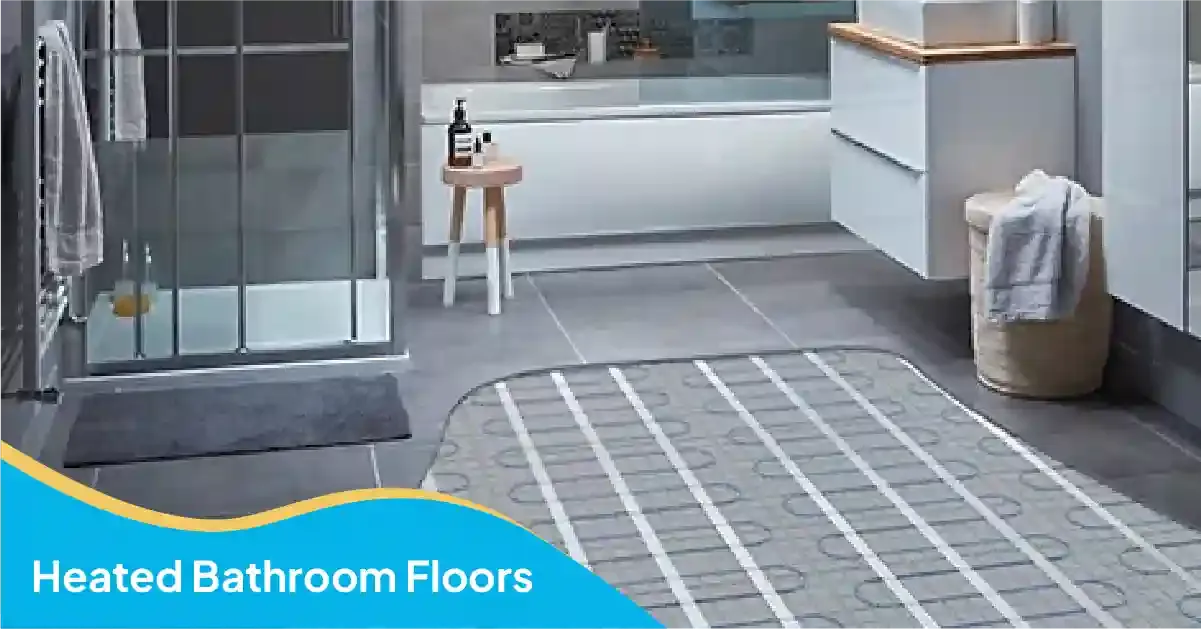
A heated bathroom floor is one of the upgrades homeowners ask about most during Hampton Roads remodels. Cold tile feels fine in July. In January, it’s a different story. The good news is that radiant floor heating fits well into a bathroom, since the room is small and the floor is usually tile. Let’s cover real costs, how the install works, and whether the upgrade pays off.
Quick Answer: What Is a Heated Bathroom Floor?
A heated bathroom floor uses electric mats, cables, or hot water tubing under the flooring to warm it from below. A thermostat controls the temperature. Most bathrooms use electric systems, and installers usually add them during a tile remodel.
Electric vs. Hydronic Radiant Floor Heating
You have two main choices. Electric radiant floor heating uses thin mats or cables wired to a thermostat. Hydronic radiant floor heating pushes warm water through tubing, and a boiler heats that water.
| Electric | Hydronic | |
| Best for | Single bathrooms | Whole home or new builds |
| Upfront cost | Lower | Higher, boiler may be extra |
| Warm-up time | About 30 to 60 minutes | About 60 to 120 minutes |
| Install | Simpler | More plumbing work |
Warm-up times come from WarmlyYours, a major heating mat maker. Your results may differ with flooring and room size.
For one bathroom, we’d lean toward electric in most cases. Hydronic makes more sense if you’re already adding a boiler or building a new home. Brands like WarmlyYours and ThermoSoft sell electric mats and cables, so you’ll find plenty of options.
How Much Do Heated Bathroom Floors Cost?
Costs vary by room size, flooring, and wiring needs. According to Block Renovation’s 2026 guide, the heating system alone runs about $7 to $17 per square foot installed. That range climbs to about $10 to $40 per square foot once new flooring is included. Angi’s floor heating guide puts electric systems at roughly $8 to $15 per square foot.
| Item | Typical cost |
| Heating system, installed | $7 to $17 per sq ft |
| System plus new flooring | $10 to $40 per sq ft |
| Thermostat | $100 to $300 |
| Boiler for hydronic, if needed | $3,200 to $9,000 |
Here’s a quick example. A 50-square-foot bathroom would cost about $350 to $850 for the system alone. With new flooring, it could land between $500 and $2,000. Small rooms often cost more per square foot, though, so ask for a written quote. Prices in Virginia may differ from these national averages.
Operating Cost and Energy Use
Electric floors use about 12 to 15 watts per square foot. That’s low for a small room. WarmlyYours estimates a typical bathroom runs about $14 per month at four hours a day. Its own examples range from about $5 to $20 monthly, depending on room size and local rates. You can check your own numbers with the WarmlyYours operating cost estimates.
A programmable thermostat helps a lot. Groups like ENERGY STAR recommend programmable thermostats for saving energy at home. Set the floor to warm up 30 minutes before you wake up. Then let it shut off when you leave. A floor sensor adds another layer of control, since it reads the actual floor temperature instead of the air.
How Heated Floors Are Installed
Installers add the system before the tile goes down. That’s why it’s most common during a remodel. Adding it later means tearing up the floor.
Here’s how a typical electric install goes:
- Check the electrical panel. Most systems need a dedicated circuit and GFCI protection.
- Prep the subfloor so it’s flat and clean.
- Lay an uncoupling membrane, if your tile plan calls for one.
- Roll out the mat and secure the floor sensor.
- Test the wiring with a meter before and after the tile goes down.
- Set the tile, let it cure, and then power up the system.
Step 5 matters a lot. A damaged wire under finished tile is costly to fix. Local conditions add a few wrinkles. In older Hampton Roads homes, panels are sometimes full, and humidity can slow subfloor drying. Our bathroom remodeling services include planning for these details before work starts.
Best Flooring for Heated Floors
Porcelain tile is the top pick. It conducts heat well and handles bathroom moisture. Natural stone works too. Luxury vinyl plank can also work, but many makers set a maximum floor temperature, so check the spec first. Thick rugs will slow the warmth.
Not sure which tile fits your style? Our bathroom tile ideas for floors, walls, and showers guide shows a range of looks that pair well with radiant heat.
Pros and Cons of Heated Floors
Pros
- Warm feet on cold mornings.
- Tile dries faster after showers, which may help with humidity.
- No bulky radiators or vents.
- Low running cost for electric systems.
Cons
- Upfront cost adds to the remodel budget.
- A failed mat may need tile removal to repair, though failures are uncommon with careful installs.
- It warms the floor, not the whole room, so it usually won’t replace your main heat.
- It needs the right electrical setup.
Is a Heated Bathroom Floor Worth It?
For many homeowners, yes, if the bathroom is already getting new tile. The added cost is smaller then, since the floor is open anyway. It’s harder to justify as a standalone project. If you rarely walk barefoot on cold tile, you may skip it. That’s a fair call. If comfort matters to you, though, it’s one of the few upgrades you’ll notice every single day.
Think about how long you plan to stay, too. Buyers may like the feature, but we wouldn’t count on it to raise your sale price. Treat it as a comfort upgrade first.
Frequently Asked Questions
Is a heated floor in a bathroom worth it?
Often, yes, especially during a tile remodel. The comfort is real, and electric systems cost little to run.
How much does it cost to add heated floors to a bathroom?
The system alone often runs $7 to $17 per square foot installed. Adding new flooring can push it to $10 to $40 per square foot. A small bathroom may total a few hundred to a couple thousand dollars.
What are the disadvantages of heated floors?
The main downsides are upfront cost, harder repairs if a wire fails, and limited whole-room heating. Slow warm-up on hydronic systems is another.
What type of heated flooring is best for a bathroom?
Electric radiant mats under porcelain tile are the usual choice. They install easily and warm up fairly fast.
Ready for a Heated Bathroom Floor?
A heated bathroom floor works best when we plan it with your tile, wiring, and layout from the start. Our licensed and insured team offers a free consultation, and we’re happy to walk through warranty details. You can get a free quote online or call (757) 966- 8230.